Course Syllabus
|
Instructor |
Sergio Gago-Masague <sgagomas@uci.edu> Join Zoom Meeting for office hours
|
|
|
TA |
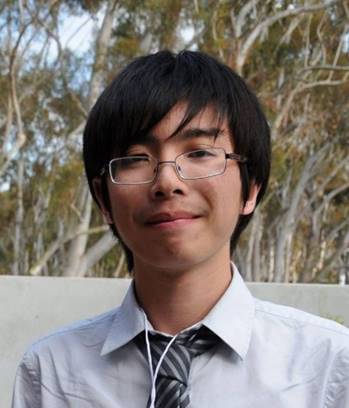
Andy Thai <andy.thai@uci.edu> |
 |
| Readers |
Ishana Patel <ishanap@uci.edu> |
|
|
Kamille Suayan <ksuayan@uci.edu> |
|
Textbook |
|
|
Meeting Times |
Lecture: Mon, Wed & Fri: 10 - 10:50 am @ Zoom Discussion: Wed 4 - 4:50 pm @ Zoom |
|
Final Exam Date & Location |
6/8 10:30-12:30 pm @online on Canvas |
COURSE DESCRIPTION:
Tentative Course Topics are shown on the canvas home page.
COURSE LOAD DISTRIBUTION:
|
Assessments & Evaluations |
Percentage of Grade/Points |
|
Homework (Zybook and Gradescope) |
15% |
|
Participation Credit (Zybook and lecture activities) |
10% |
|
Quizzes in discussion |
20% |
|
Labs |
20% |
|
Final |
35% |
In addition to the above workload and point distribution, there will be 2% of extra credit given to the students who submit the final course evaluation.
Note: Above point distribution may be changed at the discretion of the instructor without prior notice or discussion, typically in favor of students.
Proposed Grading Scale:
|
A+
|
100%
|
to 96.5%
|
|
A
|
< 96.5%
|
to 93.5%
|
|
A-
|
< 93.5%
|
to 90%
|
|
B+
|
< 90%
|
to 86.5%
|
|
B
|
< 86.5%
|
to 83.5%
|
|
B-
|
< 83.5%
|
to 80%
|
|
C+
|
< 80%
|
to 76.5%
|
|
C
|
< 76.5%
|
to 73.5%
|
|
C-
|
< 73.5%
|
to 70%
|
|
D+
|
< 70%
|
to 66.5%
|
|
D
|
< 66.5%
|
to 63.5%
|
|
D-
|
< 63.5%
|
to 60%
|
|
F
|
< 60%
|
to 0%
|
Participation Credit: Since participation plays a key role in learning, we encourage to follow the proposed participation activities in this course, and we will use two main tools to assess students' participation: (a) Zybook participation activity (readings) will be assigned for each lecture and students are encourage to complete them before the lecture or as soon after lecture as possible. In addition, randomly, we will offer (b) in-lecture short-quizzes through Canvas that will also count towards participation credit. The Participation Credit represents 10% of the total weight of the course. To have full credit, students will need to complete 75% of all assigned participation activities within the allocated time.
Attendance: Students are expected to attend each class meeting and participate fully, as full attendance increases the likelihood of learning and success in the course. Students are responsible for material that is distributed and orally communicated during class. Schedule, materials, and recordings will be posted online on the course website. However, if you know you are going to miss a graded assignment, contact the instructor beforehand. If you join the class later in the quarter, you are expected to complete all missed work immediately.
Final Grade: As a rule of thumb, it is expected about 25% of the student to earn As, about 30% to earn Bs, about 25% to earn Cs, and about 20% to earn Ds or Fs. The average course grade should be around 80%. If grades turn out to be worse than that, students can expect a grading curve to accommodate (help) the class to reach the proposed average.
COURSE POLICIES & INSTRUCTOR EXPECTATIONS:
Late policy
All assignments submitted after the due date will incur a 25% penalty + 10% per additional hour late.
This late policy only applies to the written homework and the labs. There is no late policy for participation and challenge activities.
Obtaining Assistance / E-mail Policies
Given the size of this course, we do not encourage asking course-related questions by email. For those, we have setup a public discussion forum at www.piazza.com; we think Piazza will be particularly useful for advice and tips as you work on your assignments and course topics. The Piazza sign-up link can be found on the canvas homepage (week 1)
Students can also ask questions in class (lectures and discussion sections) and make use of the instructor’s and assistants’ office hours. Discussion time is an important time to get questions answered about homework problems and labs. However, for course-related questions, we have found that piazza is a more effective and faster way to get questions answered and technical issues solved.
We are happy to help and answer any questions regarding the course material, but office hours and personal communication policies should be respected. Please do not visit office hours outside of the scheduled times or without an appointment ahead of time; as much we would like to help you, we are also busy with our own work schedules and meetings, and there is no guarantee that we will be there or are free to help you. Office hours are a time specifically set for us to be an accessible resource for you to ask any questions or request help.
Additionally, do respect communication boundaries. If you need to contact us, please do so via the official channels: Piazza, Canvas, or e-mail. Contact through other means (calling staff personal phones to ask for help, visiting home addresses, etc.) is not appropriate.
You can contact us by email for specific personal matters. You will usually get a response within 48 hours (perhaps a bit longer on the weekends and holidays). We will never intentionally ignore a message, so if you don't receive a response, write again; sometimes overactive spam filters snag a legitimate message. The subject line should start with the string `[ICS 6N]`. The message should contain your full name and student number ID.
Questions about grading should be requested on Gradescope or asked to the person who graded your paper during his/her office hours or by appointment.
We will send course announcements on Canvas, so you should check your email/canvas regularly.
Professionalism Expectations
As students, we expect you to conduct yourselves in a professional manner. This applies to both in-person and online interactions with the teaching staff and your fellow students regarding the course.
For example, Piazza can be an incredible tool for facilitating course discussion and for asking questions so you can get feedback from both your peers and the staff. However, you should be using Piazza sensibly. Online course forums like Piazza are for questions and discussion relevant to understanding course material or homework questions. Behavior and posts that do not add to the content of the discussion are discouraged. These forums should not be used like Facebook, Reddit, 4Chan, etc. Additionally, code snippets that can be taken as answers for lab exercises should not be posted on Piazza. If it is a code-related question, you can provide context without posting your snippet of code. If it is absolutely necessary to do so, please make a private post for the instructors.
We have a zero-tolerance policy for cyberbullying, harassment, or threats. Additionally, any concerns regarding your grade or criticisms for the course should be discussed directly with the teaching staff via e-mail or office hours. Piazza is not the proper medium for you to post criticisms or rants. Improper behavior will result in a warning and removal of any offending content. Repeated offenses will be reported to the University Office of Community Standards.
Academic Honesty
The Bren School of ICS and the University have already established an academic honesty policy. Read it.
Violators of academic honesty policies are subject to the penalties described in the Bren School of ICS policy. They are also subject to an immediate course grade of F, and you will not be allowed to drop the course to avoid the grade. Also be aware that a single documented case of academic dishonesty may preclude you from switching into computing majors, registering for computing minors, joining the ICS Honors Program, and graduating from a computing major with honors.
Guidelines to avoid plagiarism:
- Do not look at another person's homework. Instead, you should prefer to discuss the problem in plain English. This helps you to communicate clearly, practice technical jargon as it applies to your problem, and to identify how your solution exhibits behavior different from what you expect.
- Do not write down the solution in your notes. It is perfectly fine (and encouraged) to collaborate on work. Working in a group is a rewarding experience, and definitely a necessary skill in any professional career. The collaboration can include drawing diagrams and perhaps solving the problem on a whiteboard. However, you should avoid writing the solution in your notes. It is very useful to rethink the problem and go through the details and logic when you solve it again on your own.
We expect that:
- You can monitor each other and enforce these rules among yourselves. Making sure that others follow these guidelines will help to ensure that they don't pass off your work as their own.
- Your work honestly represents your efforts. The entire purpose of obtaining an education is so that you can accumulate a body of skills and experience that will help you later on. If you do not perform the work yourself, then you have cheated yourself out of the education. Employers in our field can (and do) screen applicants for skills and knowledge. You will perform poorly (and discredit UCI) if you do not practice now by doing your own work.
Participation
In this course, “participation” is defined as being present, prepared, and engaged. Preparation includes coming to class with the prerequisite readings/assignments completed; being engaged means that you ask and address questions in good faith, with the intention of learning and helping your classmates to learn. Your participation will be assessed through observation, completed assignments and class participation.
Collegial Courtesy/Technology Policy
Electronic devices brought to class that are used for purposes other than engaging with the course can distract both the instructor and your classmates. Imagine how you would feel if you had worked very hard on a presentation and your audience looked as though they weren’t paying attention because they had their heads down looking at an electronic device; or, imagine coming to me during office hours and I was texting while you were asking for my assistance. Research in neurobiology indicates that people cannot multi-task or learn well while trying to do so. Please turn off your phones and use laptops/iPads only for purposes assigned.
Sick Policy
Generally, sicknesses will be treated on a case by case basis. If you find that you are unable to honor a deadline or a quiz due to sickness, please get some documentation from a health care provider to assist me in maintaining fairness to the other students in the class.
Accommodation Policies
If you need an accommodation to participate in this course, please contact the Disability Services Center at (949) 824-7494 as soon as possible to better ensure that such accommodations are implemented in a timely fashion. Please review the policies on accommodation at: http://disability.uci.edu/
Course Summary:
| Date | Details | Due |
|---|---|---|