Video Games for Schizophrenia
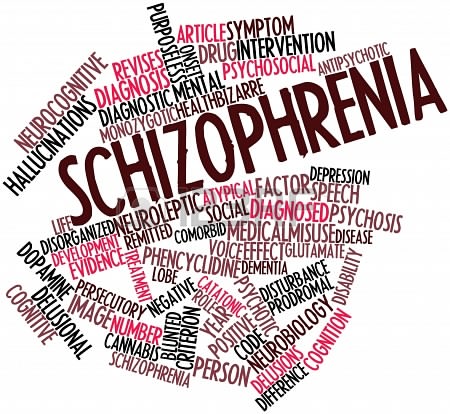
Figure 1 A collage of words relating to schizophrenia and portrays how people with schizophrenia feel in their mind through the disorganization of the words. Citation: "Schizophrenia." N.d. Yolasite. By Bethany Still. Web. 27 Jan. 2016. <http://schizophrenia1.yolasite.com/>.
Schizophrenia is a chronic and severe mental illness described as having "lower intelligence, withdrawn social behavior, conduct and adjustment abnormalities, and very mild neurological deficits." (Davidson et al. 1) In other words, schizophrenia affects how a person thinks, feels, and behaves. There are three categories of symptoms in which people diagnosed with schizophrenia may fall into: positive, negative, and cognitive. ("Schizophrenia") Positive symptoms are hallucinations, delusions, though disorders, and movement disorders which are psychotic behaviors. Negative symptoms are reduced expression of emotions, reduced feelings of pleasure in everyday life, difficulty beginning and sustaining activities, and reduced speaking which are all associated in the interruptions of normal emotions and behaviors. Cognitive symptoms include poor abilities to understand information and use it to make decisions, trouble focusing or paying attention, and problems with the ability to use information after learning it.
An 18-year-old girl had visions of stabbing her parents and two sisters. Their dead bodies would then be placed on top of each other inside the pool of their blood. She even attempted to set her family's home on fire. This 18-year-old girl is named Robbi-Lynn Jessop and "for two years she spiraled into the deepest abyss of schizophrenia." (Mandal) Since Robbi's family was unable to find treatment for her mental illness, they were forced into barricading her room and having family members take turn in standing watch. Keeping up with this life style got so tiring that the family members at times wished Robbi would just end their life. Robbi and her family are a few of the people who are affected by mental illnesses such as schizophrenia. As shown in figure 2, in a span of a year, 1.1% of U.S. adult population, which is approximately 3,552,311 people in the U.S., is diagnosed with schizophrenia. Keep in mind that this is merely the number of people who are living under the mental illness of schizophrenia and does not include the amount of people who are also affected through those with schizophrenia. "Psychiatric patients are assaulting and murdering their loved ones at an alarming rate, with family members the victims in three out of four killings committed by the mentally ill." (Mandal) If we can find a way to cure people with schizophrenia, we would be able to save a lot of lives.

Figure 2 A prevalence of schizophrenia in the U.S. (1993) Citation: "Prevalence." 1993. NIMH. By D. A. Regier, W. E. Narrow, D. S. Rae, R. W. Manderscheid, B. Z. Locke, and F. K. Goodwin. Web. 4 Feb. 2016. <http://www.nimh.nih.gov/health/statistics/prevalence/file_148221.pdf>.
Currently, there is no known cure that will treat people with schizophrenia permanently. People diagnosed with schizophrenia require a lifelong treatment and usually involves different combinations of treatments. These treatments include medications and psychological and social therapy. To be more specific, therapies required are: support group, group psychotherapy, family therapy, behavior therapy, cognitive therapy, and rehabilitation.5 Specialists like psychiatrists, primary care providers, and clinical psychologists are also needed to either prevent, diagnose, or treat mental disorders. Resources are limited in the world and even though there are resources available, not everyone is privileged to afford expensive resources when it comes to medical treatment or therapy. For example, in Figure 3, patients are waiting in line at a free clinic located in one of Milwaukee's poorest neighborhoods. The line is formed an hour early and even stretches a block down. ("Poor Health: Poverty and Scarce Resources In U.S. Cities," n.d.) This shows how resources are limited in the world and how people cannot afford such treatments and have to resort to waiting in line for a free clinic. These therapeutic professionals and medications that can help patients with schizophrenia require a lot of expenses and a lot of people do not have the money to afford professionals for a lifelong period of time.

Figure 3 Patients waiting in line at a clinic in one Milwaukee's poorest neighborhoods. (1988) "Pittsburgh Post-Gazette: Poor Health." Poor Health: Barriers to Health Care for Low-Income America. N.p., n.d. Web. 02 Feb. 2016. <http://newsinteractive.post-gazette.com/longform/stories/poorhealth/1/>.
The first treatment that was discovered to be effective towards psychotic disorders was founded in 1952 by a French surgeon. (Kane and Correll 2) The surgeon was testing the effects of antihistamines on reducing surgical shock and found that the antihistamine, chlorpromazine, had a strong effect on mental state. After hearing about the observations of the discovery, a psychiatrist named Pierre Denker decided to implement the use of chlorpromazine in a few of his patients that were difficult to manage. Although the support for testing drugs on patients was reluctant in psychologists in the U.S., the results were exceptional and chlorpromazine was approved in 1954 by the Food and Drug Administration. Within 10 years of the approval, treatment of psychotic disorders through the medication was administered to at least 50 million people across the world. The discovery of chlorpromazine was considered "one of the great advances in twentieth century medicine."
Although the discovery of chlorpromazine was a breakthrough in the medical fields, the search for a better and a more effective treatment continued. In 1969, two psychiatrists named Donald Klein and John Davis published their study in which they found a new treatment called phenothiazines to be more effective than chlorpromazine. (Kane and Correll 3) However, the use of phenothiazines caused a rise in concern because of the neurological effects on patients who took doses of phenothiazine for treatment. At first, patients would experience parkinsonism, which is a disorder of the central nervous system affecting movement and often includes tremors. Patients would later experience tardive dyskinesia, which is caused by long-term usage of psychiatric drugs and results in a condition that affects the nervous system. Even though medications for parkinsonism existed at the time, debates over the topic still occurred because the antiparkinson medication contained their own set of side effects.
Around early to mid 1990s, cognitive enhancement therapy was developed and tested as a treatment to those with schizophrenia. (Hogarty) A study conducted on the use of cognitive enhancement therapy utilized patients who were cognitively disabled with stable schizophrenia symptoms. In the study, these patients were placed into a progressive software training exercise for approximately 75 hours, 1.5 hours per week, that focused on training attention, memory, and problem solving. As shown in figure 4, a student is participating in a cognitive enhancement therapy through the software training exercise. Each round, the student would be challenged in a different task and each exercise gets "progressively harder." (Glausser) The students are not looking to focus on accuracy, but to focus on trying to do each exercise as swiftly as they can. The "software training exercise required each patient to work in pairs, offer mutual support and encouragement, respond to online Socratic coaching, and use the cueing and fading of prompts until the principles underlying test performance was mastered." (Hogarty) This study resulted in the improvement of cognitive deficits and related behaviors when patients with stable schizophrenia are exposed to relevant rehabilitation. Although cognitive enhancement therapy was tested beneficial in treating patients with schizophrenia, there is still more to learn and discover about behavioral therapies that would better treat patients with schizophrenia, for those who have a more severe case of schizophrenia.

Figure 4 A student using a brain-training program. (2012) Citations: "A Student Does Computer Exercises as Part of a Brain-training Program, Called Cognitive Enhancement Therapy." 2012. Ideastream. By Anne Glausser. Web. 27 Jan. 2016. <http://www.ideastream.org/news/beyond-stable>.
Pharmacologic treatments and behavioral therapies of schizophrenia is still in progress in present day life. Treatment for schizophrenia is better now than treatment in the past; however, the treatment is not sufficient because patients are not cured and still require lifelong treatments. Similar to how previous treatments would turn into a dead end, the current treatment has hit a brick wall as well.
Despite how effective treatment is now compared to the past, treatment for patients with schizophrenia requires a lot of expenses from either family members of the patient or from taxpayers. "Patients who require more intensive treatment, integrated care by a psychiatrist costs $1,331 for fifteen psychiatrist visits." (Dewan) If people were required to visit a psychiatrist daily, they would be spending $2,662 a month and within a year, they would be required to pay $31,944 for treatment. This means that a patient has to spend about thirty two thousand dollars a year, excluding any other medical costs and necessities. There is not a lot of families that make enough income at work to cover the cost of such medical treatments while paying off bills and buying necessities, like groceries. Even if hospitals were to pay the costs of such treatments through aids like insurance, the fact that these treatments are costly does not change. Figure 5 shows the amount of money spent through the health care, Obamacare, and the expected estimate for future costs of Obamacare's coverage. The costs of treatment, medications, etc. requires a lot of money. If we were to find a better solution to schizophrenia, we would be able to reallocate a portion of the money into solving other problems. A breakthrough would be finding a treatment to schizophrenia that is both effective and readily available to everyone at low costs, in terms of expenses and resources.

Figure 5 A graph of the estimated cost for Obamacare. (2012) Citation: "Estimates for the Insurance Coverage Provisions of the Affordable Care Act Updated for the Recent Supreme Court Decision." 2012. The Heritage Foundation. Web. 4 Feb. 2016. <http://www.heritage.org/multimedia/infographic/2012/10/federal-spending-by-the-numbers-2012/obamacares-annual-costs-exceed-$100-billion-by-2015>.
Video games can serve as a medical treatment or therapy to patients at a lower cost to both hospitals and families. Shown in figure 6 is a young boy who is playing video games to escape from reality and from the situation he is currently in. By focusing his attention into the virtual world, he is able to forget that he's lying down on a hospital bed. Compared to "nondigital play objects or entertainment," video games are more beneficial through their ability to be more engaging and distracting towards patients. (Kato 2) Furthermore, video games are more affordable than professionals and more readily available, allowing them to be more favorable in communities with lower resources than others.

Figure 6 A young patient boy playing video games to distract himself from the situation he is in. (2014) Citation: "The Healing Power of Video Games." 2014. Pixlbit. By Julian Titus. Web. 27 Jan. 2016. <http://www.pixlbit.com/feature/3248/the_healing_power_of_video_games>.
Studies have been tested in the past, dating back as far as 1980s, showing that video games do reveal an impact on patients. One study conducted was testing the effects of video games on pediatric cancer patients undergoing chemotherapy. (Redd et al. 1) A known side effect of chemotherapy is the nausea that the process causes. During this study, patients were given video games to occupy themselves as they received chemotherapy. The results of this study revealed that playing video games contributed to a decrease in the amount of nausea that patients of pediatric cancer experienced as an outcome of chemotherapy. Although a medical approach to handling the nausea felt by patients would be to assign trained therapists, the difference between the cost and availability of video games and trained professionals is in favor of video games.
Furthermore, there was another study conducted in the past that reveals how video games are beneficial and engaging for players. A study focusing on exercising normally and through the use of video games was conducted to test the effects of video games in terms of engagement in exercising. (Plante et al. 1) Participants in the study were placed into three different categories: stationary bicycles (group 1), video game of bicycling without the physical exercise (group 2), and stationary bicycles while experiencing a video game effect simultaneously (group 3). The end of the study resulted with the participants who were placed into group three being better off, physically, than the other two groups. Group three experienced more joy in their activity, increased energy to further continue exercising, and reduced tiredness allowing them to last longer. Through this, the study reveals that video games prove themselves to be a great candidate in being an alternative to treatments.
In conclusion, schizophrenia is a problem and quite of lot of people happen to have schizophrenia. Pharmacologic treatments and therapies has slowly progressed into what we have now and still continues to grow. Current treatment for schizophrenia is great, but not the best because of the cost and efficiency treatments require. The ideal treatment is out in the world and will one day be discovered.


 icons at the top right corner of the subsection.